Micro perforated bags represent the intersection of material science and shelf-life optimization. By regulating atmospheric exchange, these specialized bags serve as the cornerstone of global fresh produce distribution, commercial baking supply chains, and industrial ventilation packaging.
Micro perforated packaging is engineered with high-precision micro-pores ranging from 50 to 300 microns in diameter. This precise configuration regulates the balance of Oxygen (O₂) and Carbon Dioxide (CO₂) transmission, minimizing respiration rates of perishable commodities.
By preventing the accumulation of excess humidity, micro-perforations block the microbial proliferation pathways of mold and aerobic bacteria. In industrial packaging, such as chemical packaging bags and powder bagging, these micro-pores prevent air trapping during rapid filling, allowing high-speed production lines to run smoothly without sacrificing the integrity of the bag.
For large-scale agricultural projects and international export operations, choosing the right supplier ensures compliance with global food safety standards and significantly mitigates risk of crop damage during transit.
Establishment Year
Annual Production Capacity
Expert Engineering Specialists
Certified Quality Management
Sustainable polymers, advanced laser tooling, and localized customization are shaping the dynamic shift in global flexible packaging demands.
Consumer pressure and governmental bans on single-use plastics are forcing the transition toward recyclable Polyethylene (PE) matrices, Polylactic Acid (PLA) polymers, and post-consumer recycled (PCR) films. Perforation technology is adapting to keep these green alternatives highly functional.
Modern B2B buyers require exact oxygen transmission rates (OTR). While mechanical hot-needle punching provides cost efficiency for bakery products, high-speed, programmable laser perforation systems achieve clean, microscopic holes without leaving residue, allowing precise adjustments for produce preservation.
For fresh produce packaging, micro-perforations are frequently paired with advanced chemical features like antifogging agents (AF) and ethylene-absorbers. This dual mechanism maintains structural transparency and controls ripening agents inside the container.
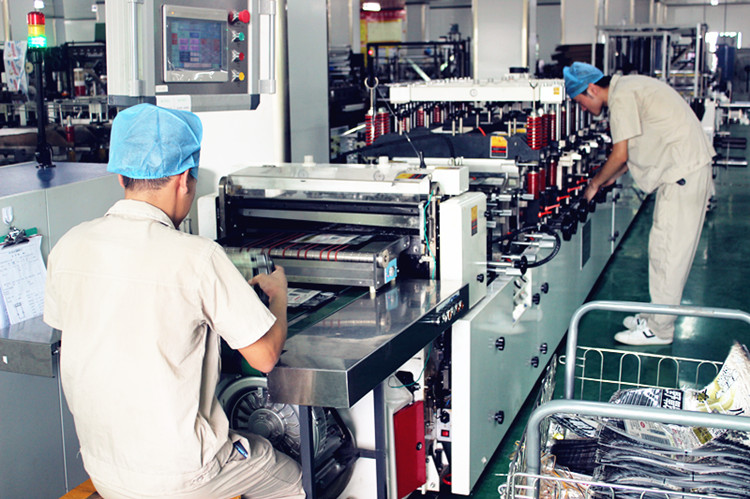
As international corporations work to build resilience against supply disruptions, China's modern packaging factories have transformed. Tongcheng Packaging Materials Co., Ltd. is a prime example of this industrial shift. Operating since 1985, the company utilizes integrated machinery that connects raw material processing to final bag conversion.
With a registered capital of RMB 11.98 million Yuan, a 5,500 square meter factory floor, and 7,700 square meters of production space, Tongcheng coordinates raw film blowing, precise gravure printing, laminating, slitting, and bag conversion. This end-to-end integration simplifies the supply chain, lowers material handling costs, and eliminates vulnerabilities commonly found in outsourced production networks.
Their quality management system operates in compliance with ISO22000 and GB 9683-1988 food safety regulations. These rigorous systems ensure that every batch of micro-perforated food packaging matches target oxygen transmission rates (OTR) and complies with international food-contact hygiene standards.
When assessing suppliers for micro perforated bags, industrial buyers must look beyond unit costs and evaluate production capacity, material engineering expertise, and quality control systems.
Top-tier suppliers work with diverse materials (BOPP, CPP, LDPE, PET, and Compostable Films) to meet mechanical strength requirements and match the specific respiration profiles of client products.
Leading manufacturers offer both hot-needle and laser perforation options. They provide documentation of pore uniformity and ventilation ratios per square meter, ensuring consistency across product lines.
Working with partners like Tongcheng provides buyers with reliable guarantees, including Product Quality Protection, Payment Protection, On-time Shipment Protection, and Service Protection.
Suppliers that handle plate-making, film-blowing, multi-color gravure printing, and bag conversion in-house control every step of production. This results in faster lead times and lower defect rates compared to trading intermediaries.
Reliable exporters present validated certificates, such as ISO 22000, BRCGS, and FDA-compliant test records, ensuring seamless imports into European, American, and Asian markets.
Industrial suppliers must demonstrate a substantial annual output capacity. Tongcheng's 5,000-ton annual output capacity ensures they can scale up production to meet high-volume seasonal packaging demands without delay.
How different industries use micro-perforated technology to protect product quality and improve logistical efficiency.
Scenario: Shipping premium berries, grapes, or baby spinach across regional borders.
Mechanism: Micro perforated LDPE and BOPP bags allow ethylene gas to escape and oxygen to flow, preventing condensation build-up and preserving flavor, firmness, and color during transit.
Scenario: High-volume packaging of crusty baguettes, sourdough, or warm pastries.
Mechanism: Micro-pores release steam from freshly baked items, preventing the crust from becoming soggy while keeping the interior soft, extending overall shelf shelf-life.
Scenario: Filling and palletizing high-density chemical materials.
Mechanism: Perforation patterns release trapped air quickly during high-speed filling, allowing the bag to pack tightly. This prevents punctures and ensures stable, space-efficient stacking on pallets.
Expert answers to common technical, material, and regulatory questions about sourcing micro-perforated bags.
 Premir Plastic Package