Choosing the right plastic packaging thickness starts with the product, not a thickness chart. A thin film may protect lightweight garments, while a dense detergent pouch needs stronger puncture resistance. The correct choice depends on product weight, shape, filling temperature, storage time, transport distance, and sealing method. Why do plastic packages have different thicknesses? They face different physical stresses. A package carried across rough roads needs different protection from one stored on a clean retail shelf.
In practical packaging evaluations, engineers often inspect the filled pack rather than the empty film. They check corner damage, seal strength, stretching, leakage, and performance after stacking. A thicker package can reduce failures, but it may increase material use, production costs, and disposal challenges. Thicker is not always better. Sometimes, a well-designed multilayer structure provides stronger protection with less material. This depends on resin selection, orientation, barrier requirements, and manufacturing control.
Reliable decisions should combine laboratory testing with real distribution trials. Drop tests, compression tests, seal tests, and climate exposure can reveal weaknesses that specifications miss. A package may pass a factory test and still fail after three weeks in heat and humidity. That possibility deserves attention. Packaging requirements also vary by region, product category, and supply chain conditions, so one universal thickness is unrealistic. The goal is a balanced specification that protects the contents, supports efficient production, and avoids unnecessary plastic. Careful testing makes that balance measurable.
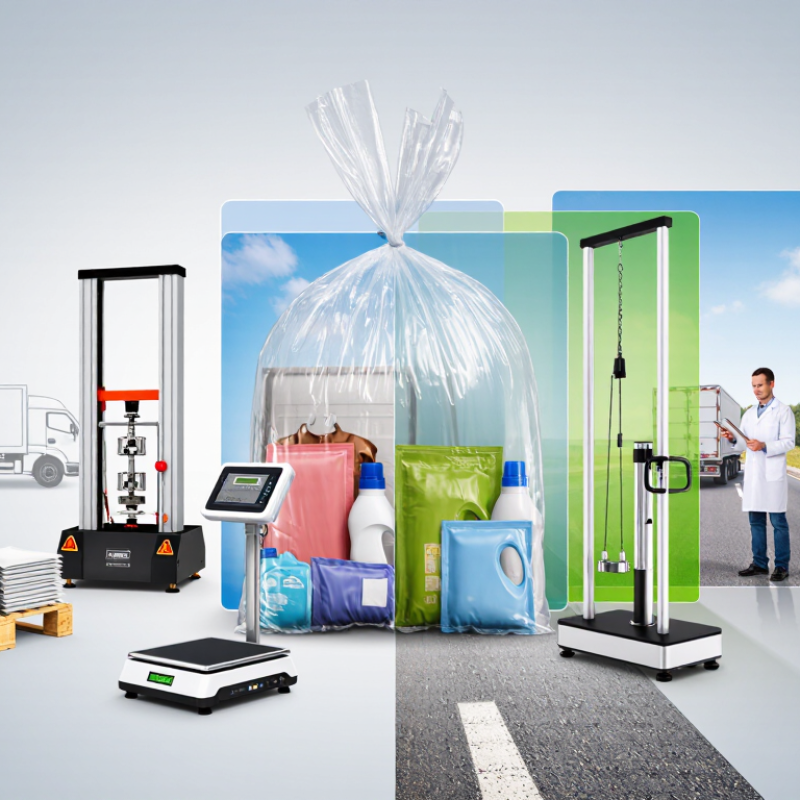
Define the Product’s Protection and Handling Requirements
How to Choose the Right Plastic Packaging Thickness?
Define the Product’s Protection and Handling Requirements
Packaging thickness should begin with the product, not a standard thickness chart.
A glass bottle needs impact protection during loading and transport. A soft garment may need tear resistance, moisture control, and clean presentation. Product weight, shape, surface edges, and filling temperature all influence the film structure.
Observe the real handling process. Does the package pass through conveyors, manual packing stations, or cold storage? Workers may drag bags across rough tables. Cartons may be stacked unevenly for several days. Test samples under these conditions. Measure puncture resistance, seal strength, drop performance, and compression resistance. Small details matter. A sharp corner can defeat a thick film.
A thicker material is not always safer.
It can create stronger seals, but it may also increase cost, material use, and packing difficulty. In practical trials, a thinner film with better structure can outperform a heavier film. This is easy to overlook.
Record failures honestly, including weak seals and awkward handling. Then adjust thickness, additives, or package design based on evidence. Independent laboratory testing can confirm results when shipments are valuable or conditions vary widely. Keep specifications clear, repeatable, and linked to the product’s actual protection needs.
Identify the Plastic Type and Its Performance Characteristics
Choosing plastic packaging thickness starts with identifying the plastic type, not measuring the film with a ruler. Polyethylene, polypropylene, and polyethylene terephthalate behave differently under pressure, heat, and moisture. A thicker structure can still fail if the resin has poor puncture resistance or weak sealing performance.
Check the technical data sheet for tensile strength, elongation, tear resistance, oxygen transmission, and moisture transmission. For frozen products, flexibility at low temperatures matters. For oily contents, chemical resistance becomes important. A clear PET container may offer good stiffness, while a polyethylene pouch may provide better impact resistance. These differences affect the required thickness.
Test the actual package with the intended product. Fill it, stack it, drop it, and inspect the seals. Watch for tiny leaks around corners. In one small trial, increasing thickness did not solve the problem because the seal temperature was incorrect. That result was easy to miss. Thickness is only one variable.
Use samples from the planned production process, because laboratory films may behave differently. Ask qualified material engineers or testing laboratories to verify performance against the package’s use conditions. Record humidity, temperature, filling speed, and storage time. Small changes can alter results. A practical choice balances protection, process reliability, material use, and realistic handling conditions.
Match Packaging Thickness to Product Weight and Shape
How to Choose the Right Plastic Packaging Thickness?
Match Packaging Thickness to Product Weight and Shape
Packaging thickness should reflect both product weight and physical shape. A light, smooth item may need less material than a heavier product with corners or uneven surfaces. Weight alone is not enough.
A 500-gram product with rounded edges can stress packaging less than a 300-gram item with sharp corners. Rigid edges concentrate pressure during stacking, handling, and delivery. For these products, thicker film or reinforced sections can reduce tearing and punctures. Flexible contents may also need stronger packaging because they shift inside the pack.
Start with a practical trial. Measure the product, pack it, and inspect stretched areas around corners and seals. Then perform drop, compression, and puncture checks that reflect real handling conditions. Small details matter. A box dropped on one corner creates different pressure from a flat impact.
I once underestimated the effect of an irregular shape. The package looked strong during filling but developed a small tear after repeated movement. That result changed the material choice, though the first decision seemed reasonable. Testing should guide thickness, not guesswork. Compare samples with different gauges, such as 50, 75, and 100 microns, while checking protection, flexibility, sealing quality, and material waste. The thickest option is not always the best option. Verify applicable packaging requirements in each target market before production.
Evaluate Barrier, Seal, and Environmental Resistance Needs
How to Choose the Right Plastic Packaging Thickness?
Evaluate Barrier, Seal, and Environmental Resistance Needs
Thickness should support the product, not simply make the package feel stronger. A packaging engineer should measure oxygen transmission rate and water vapor transmission rate for sensitive contents. A thicker film may still provide poor barrier performance if its material structure is unsuitable. Choose the required barrier first, then adjust thickness for handling and transport.
Seal performance deserves equal attention. During production trials, inspect seal strength, seal width, and leakage after filling. Test seals with small wrinkles, product residue, and uneven pressure. These details reflect real factory conditions. Seal quality matters more. A wide sealing window can reduce failures when equipment settings drift. I have seen strong films fail because the seal became brittle after heating.
Environmental resistance also changes the correct thickness. Expose filled samples to humidity, cold storage, heat, compression, and vibration. Check for cracking, swelling, delamination, and pinholes afterward. Outdoor packaging may need better ultraviolet resistance, not only extra plastic. Puncture testing helps when sharp edges or rough transport are expected. Standards such as ASTM or ISO methods can improve test consistency, but laboratory results cannot predict every warehouse. That limitation deserves attention. Review actual complaints and handling records before finalizing the specification. Sometimes a slightly thinner structure performs better because it seals more reliably and creates less material waste.
Test, Compare, and Confirm the Most Suitable Thickness
How to Choose the Right Plastic Packaging Thickness?
Choosing plastic packaging thickness should begin with evidence, not guesswork. A thicker material may feel safer, but it can still tear at a sharp corner. Consider the product’s weight, shape, moisture exposure, temperature, and transport distance. Measure sample thickness at several points with a calibrated gauge. Small variations can affect sealing and protection.
Test, compare, and confirm the most suitable thickness using real packaging samples. Check puncture resistance, drop performance, seal strength, compression, and appearance after handling. Use relevant ASTM or ISO methods when available, and record every result in a simple comparison table. My first assumption was that the thickest sample would perform best. It did not. One thinner sample sealed more consistently and reduced unnecessary material.
Tips: Test filled packages, not empty film. Simulate stacking, vibration, and repeated handling. Compare at least three thickness options. Let samples rest before testing, because temperature can change flexibility and seal behavior. Ask operators to review the process, too. Their practical feedback may reveal slow sealing or awkward handling. Confirm the final thickness through a small production trial, then inspect samples from different batches. Do not rely on one successful test. Recheck weak points, especially corners and seals. Testing takes time, but replacing damaged packaging costs more.
How to Choose the Right Plastic Packaging Thickness? - Test, Compare, and Confirm the Most Suitable Thickness
The table below compares typical performance of blown low-density polyethylene (LDPE) film at different thicknesses. Results are intended as a practical reference for material selection and should be confirmed with product-specific testing under actual packing, transport, sealing, and storage conditions.
| Film Thickness |
Typical Packaging Use |
Recommended Test Conditions |
Tensile Strength
MD / TD |
Elongation at Break
MD / TD |
Puncture Force |
Dart Drop Impact |
Heat-Seal Strength |
Relative Material Cost |
30 μm
(1.18 mil) |
Lightweight liners, dust covers, inner bags, and low-load packaging |
23°C; 50% RH; 24-hour conditioning; testing in machine direction (MD) and transverse direction (TD) |
18 / 16 MPa |
350% / 500% |
3.2 N |
55 g |
4.5 N/15 mm |
Low
Index: 100 |
50 μm
(1.97 mil) |
General-purpose bags, garment packaging, soft goods, and lightweight components |
23°C; 50% RH; 24-hour conditioning; film sealed at 140°C to 160°C |
21 / 19 MPa |
400% / 550% |
5.6 N |
95 g |
6.8 N/15 mm |
Low to Medium
Index: 167 |
75 μm
(2.95 mil) |
Retail bags, e-commerce overbags, moderate-load liners, and protective wrapping |
23°C; 50% RH; 24-hour conditioning; simulated handling with filled packages |
24 / 22 MPa |
450% / 600% |
8.1 N |
145 g |
8.9 N/15 mm |
Medium
Index: 250 |
100 μm
(3.94 mil) |
Heavy-duty bags, industrial liners, sharp-edged product protection, and export packaging |
23°C; 50% RH; 24-hour conditioning; drop testing with the intended product load |
27 / 25 MPa |
500% / 650% |
11.4 N |
205 g |
11.2 N/15 mm |
Medium to High
Index: 333 |
125 μm
(4.92 mil) |
High-abrasion liners, bulk packaging, reusable covers, and demanding transport applications |
23°C; 50% RH; 24-hour conditioning; repeated abrasion and compression simulation |
29 / 27 MPa |
525% / 675% |
14.8 N |
270 g |
13.5 N/15 mm |
High
Index: 417 |
150 μm
(5.91 mil) |
Very heavy-duty liners, large industrial bags, and high-risk handling environments |
23°C; 50% RH; 24-hour conditioning; full-load transport and impact verification |
31 / 29 MPa |
550% / 700% |
18.2 N |
330 g |
15.7 N/15 mm |
Very High
Index: 500 |
Testing references: Tensile strength and elongation are commonly evaluated using ASTM D882 or ISO 527-3. Dart drop impact can be evaluated using ASTM D1709. Puncture resistance may be measured using ASTM F1306, while heat-seal strength can be assessed using ASTM F88/F88M. Actual results vary with resin grade, additives, film orientation, seal design, temperature, humidity, and production process.
Selection guidance: Start with the thinnest film that passes the required puncture, impact, seal-strength, drop, and transport tests. For many general-purpose applications, 50–75 μm provides a practical balance between protection and material use. Increase to 100 μm or more when the package contains sharp edges, has a high filling weight, or will experience repeated handling and long-distance transport.
Conclusion
Choosing the right plastic packaging thickness starts with understanding the product’s protection and handling requirements. Consider whether the package must resist impact, compression, punctures, moisture, oxygen, or temperature changes during storage and transportation. The type of plastic also matters because each material has different levels of strength, flexibility, clarity, and barrier performance. Why do plastic packages have different thicknesses? Because products vary in weight, shape, fragility, and exposure to environmental conditions, so one thickness cannot meet every application.
The ideal thickness should support the product without creating unnecessary material use or excess cost. Evaluate how the package will be formed, filled, sealed, stacked, and opened, while checking whether it can maintain a reliable seal and protect its contents. Environmental resistance, including humidity, heat, cold, and light exposure, should also be considered. Finally, test several thickness options under realistic handling and storage conditions. Comparing performance, appearance, durability, and efficiency will help confirm the most suitable solution.

 Premir Plastic Package