How to Choose Top Eco Friendly Plastic Packaging from China

Time:2026-09-29 Author:Mason
0%

Choosing sustainable packaging from China requires more than searching for “green” labels. It demands verified materials, practical factory experience, and transparent environmental data. This guide explains how to choose eco-friendly plastic packages for real supply chains, not only attractive product pages.

The OECD’s Global Plastics Outlook reports that global plastic waste reached 353 million tonnes in 2019, while only 9% was recycled. That figure changes the buying conversation. A package made with recycled resin may still fail if it cannot be collected, sorted, or recycled locally. Buyers should examine resin type, post-consumer recycled content, thickness, additives, and end-of-life instructions. Ask the supplier for batch-level test reports. Request evidence from recognized laboratories, rather than relying on a recycled symbol alone. Small details matter, such as whether a pouch uses one polymer or a difficult-to-separate multilayer structure.

UNEP’s Turning off the Tap report states that plastic pollution could be reduced by 80% by 2040 through reuse, recycling, and redesigned products. This supports a broader evaluation of Chinese suppliers. Compare material performance, transport weight, production waste, energy data, and minimum order quantities. Check certifications carefully, including scope, validity, and issuing organization. ISO 14021 can help assess self-declared environmental claims, but certification does not replace independent verification. No supplier is perfect. Some factories provide excellent testing but weak traceability; others offer strong recycled content with inconsistent color or strength. A responsible buyer records these trade-offs, tests samples under actual filling conditions, and improves the specification before placing a large order. That is where sustainability becomes measurable.
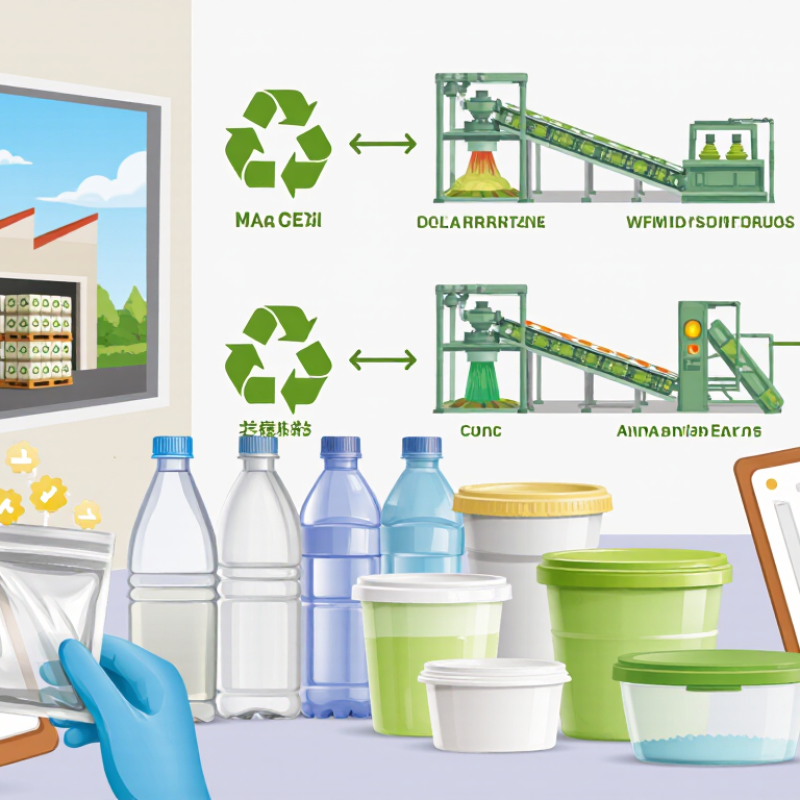
How to Choose Top Eco Friendly Plastic Packaging from China

Define Eco-Friendly Plastic Packaging Requirements

Before sourcing eco-friendly plastic packaging from China, define what “eco-friendly” means for your product and customers. A pouch for dry tea needs different protection than a bottle holding a moisture-sensitive lotion. Write down the required capacity, dimensions, closure type, shelf life, and expected shipping conditions. Specify whether recycled content, reduced material use, or compatibility with local recycling systems matters most. These goals can conflict. A thinner package may use less plastic but fail during transit.

Tips: Request material specifications, relevant test reports, and samples from the supplier. Check the package with your actual product, not water alone. Test seals, leaks, and handling after a few days. Ask what disposal options are realistically available in your target market; “compostable” does not mean suitable for every bin. Keep requirements in writing.

I have seen packaging decisions become harder when teams focus on a single label instead of performance and end-of-life details. That is worth reconsidering. Compare the full specification, including material layers, colorants, printing, and recycling guidance. Confirm that documents match the exact sample and proposed production material. If results are unclear, request clarification before approving an order. A small pilot run can reveal weak seals or confusing disposal instructions before larger quantities are produced.

Compare Sustainable Materials and Packaging Types

Choosing eco-friendly plastic packaging from China starts with the product, not a green label. Compare recycled-content polyethylene and polypropylene with bio-based plastics. Check flexibility, heat tolerance, sealing performance, and the percentage of recycled or plant-derived material. A pouch may use less material than a rigid tub, but it may be harder to recycle when made from multiple layers. Details matter.

Packaging type changes the trade-offs. Lightweight films can reduce shipping weight, while bottles and tubs may protect products from crushing or leaks. Reusable containers need enough durability to justify their extra material. Ask suppliers for material specifications, sample packs, and test results for your actual filling and transport conditions. A sample that looks sturdy on a desk may fail after a long, warm shipment.

Tips: Request a clear material breakdown and confirm whether closures, labels, and liners match the main package. Compare samples side by side. Check local recycling access before choosing a material; a theoretically recyclable pack may not be accepted nearby. I would not assume one option is always greener. Trade-offs deserve a second look.

Evaluate Chinese Suppliers and Manufacturing Standards

Choosing eco-friendly plastic packaging from China starts with evaluating the supplier, not the sales sheet. Ask which resin is used, how much recycled content it contains, and whether additives affect sorting. Request a current material specification and test reports tied to the exact package structure. Paper labels, inks, and closures can change how a package performs in local recovery systems. Details matter.

Look for documented production controls, including incoming-material checks, line temperature records, and batch traceability. During a factory review, compare written procedures with the actual work floor. Are resin bags labeled? Are rejected parts separated? Does the operator record seal strength at set intervals? These observations can reveal more than polished presentation photos. Ask how defects are handled and whether corrective actions are recorded, not just promised. Certificates help, but their scope and expiry dates should match the factory and product.

Before a large order, test samples for thickness consistency, sealing, print rub, and transport damage. Keep test conditions written down so supplier results can be compared fairly. One imperfect sample is useful. It may expose a weak corner or a seal that opens after cooling. Ask for a revised sample, then repeat the same checks. Specifications can still miss practical issues; refine them rather than ignoring them.

Verify Certifications, Safety, and Environmental Claims

Choosing eco-friendly plastic packaging from China requires more than trusting a green label. Ask the supplier for current certificates, test reports, and the issuing laboratory’s details. Check the certificate number, product scope, material composition, and expiry date. A document covering one film may not cover another thickness or color. Small details matter.

For food or cosmetic packaging, verify migration testing for the destination market. Request evidence for heavy metals, additives, odor, and overall safety. The factory should explain how it controls production batches. Photos of resin bags, production lines, and sealed cartons can support this review. Still, photos are not proof. An independent factory audit is stronger.

Environmental claims need equal pressure. Confirm recycled content through purchase records, chain-of-custody documents, or recognized verification systems. For compostable packaging, ask whether it works in home compost or only industrial facilities. “Biodegradable” is too vague without time, temperature, and disposal conditions. I once viewed a material as sustainable because it used less plastic, but its disposal route was unclear. That was a useful warning. Request a written claim statement, compare it with test results, and keep samples from each approved batch. Suppliers may provide excellent paperwork, yet quality can drift after approval. Recheck it.

How to Choose Top Eco Friendly Plastic Packaging from China - Verify Certifications, Safety, and Environmental Claims

What to Evaluate What to Request from the Supplier How to Verify It Warning Signs
Material and recycled-content claims Exact polymer type (such as PET, HDPE, or PP), recycled-content percentage, and whether the content is post-consumer or post-industrial. Request supporting batch or production records. Check that the documentation identifies the same product, material, percentage, and production site as the quotation. Where relevant, request an independent recycled-content verification or chain-of-custody evidence. “Recycled,” “green,” or “eco” claims without a defined percentage, material description, or supporting records.
Food-contact safety For the intended destination market, request applicable declarations of compliance and migration-test reports for the specific packaging, intended food type, and conditions of use. For EU markets, check applicable requirements including Regulation (EC) No 1935/2004 and, for plastic food-contact materials, Regulation (EU) No 10/2011. For the United States, confirm compliance with the applicable FDA food-contact requirements for the specific substance and conditions of use. Verify report scope and test conditions. A generic “food-grade” certificate, a report for a different material or product, or test results that do not match the intended use.
Recycled plastic for food contact Evidence that the recycled material and recycling process are permitted for the destination market and suitable for the intended food-contact application. For the EU, check the requirements of Regulation (EU) 2022/1616 on recycled plastic materials and articles intended to contact foods, where applicable. Confirm current regulatory status and product-specific documentation. Assuming that any recycled plastic is automatically suitable for food contact, regardless of source, process, or application.
Compostability claims The exact standard and certification scope, including whether the claim applies to the full packaging item or only a component, and whether it is for industrial or home composting. EN 13432 relates to requirements for packaging recoverable through composting and biodegradation. ASTM D6400 addresses labeling of plastics designed for aerobic composting in municipal or industrial facilities. Verify the certificate and the facility conditions required. “Compostable” without specifying the environment; treating industrial compostability as proof of home compostability or backyard breakdown.
Biodegradable claims Test method, test environment, timeframe, and evidence identifying what the claim covers and what conditions are necessary. Review the complete test report and claim wording. Confirm that results relate to the finished product and the conditions in which it is expected to biodegrade. Unqualified claims such as “biodegradable” with no test conditions, timeframe, or disposal guidance.
Environmental management certification A current certificate showing the certified legal entity, manufacturing site, scope, and validity dates. Verify the certificate with the issuing certification body or its registry. ISO 14001 concerns an environmental management system; it does not by itself certify that a particular package is recyclable, compostable, or environmentally preferable. A certificate belonging to another site or company, an expired certificate, or a claim that an environmental management certificate proves product-level benefits.
Environmental-impact comparisons The functional unit, system boundaries, assumptions, data sources, and comparison basis for any life-cycle or carbon-footprint claim. For life-cycle claims, ask for the underlying assessment and check whether its scope and assumptions are suitable for the product and comparison. ISO 14040 and ISO 14044 set principles and framework requirements for life-cycle assessment. “Lower carbon” or “better for the planet” comparisons with no baseline, disclosed scope, or supporting evidence.
Product consistency and traceability Product specification, material declaration, batch identification, change-control process, and records linking test reports to the supplied packaging. Compare the approved sample, purchase specification, test documentation, and delivered goods. Arrange independent inspection or testing when risk, order size, or regulatory obligations justify it. Unannounced material or production changes, inconsistent product descriptions, or inability to link documents to the actual goods.

Selection tip: Confirm requirements for the destination market and intended use before ordering. Standards, legal requirements, and certification scopes vary; verify current documents with the relevant regulator, standards body, or certification issuer.

Assess Costs, Customization, Delivery, and Long-Term Value

Choosing eco-friendly plastic packaging from China takes more than comparing the unit price. Ask suppliers to quote the same material, dimensions, thickness, printing, and order quantity. A low price may exclude mold fees, sample charges, or shipping. Request a written breakdown. Small details matter.

Customization should fit the product, not just the design brief. Share fill weight, storage conditions, and how the package will be sealed. Ask for a physical sample and test it with your product. Check the seal, flexibility, and print clarity. Also confirm what “eco-friendly” means for the specific material, and request relevant test reports rather than relying on a broad claim.

Tips: Compare landed costs, not factory prices alone. Confirm production time, shipping method, and packaging for transit in writing. Keep one approved sample for later checks.

Delivery delays can affect more than launch dates; they may leave shelves empty or force costly replacement orders. Discuss lead times, inspection points, and how defects will be handled before placing a large order. For long-term value, consider material consistency and whether the packaging works with your filling equipment. A cheaper option that jams a line is not truly cheaper. Still, forecasts can be wrong, so avoid committing to more stock than storage and demand can support.

How to Choose Top Eco-Friendly Plastic Packaging from China

The chart compares indicative ex-factory price ranges for commonly sourced eco-friendly packaging materials. Actual prices vary according to resin grade, recycled content, order volume, tooling, printing, certifications, and Incoterms.

Recycled PET and recycled HDPE generally provide strong long-term value because they combine established processing technology with broad customization options. PLA can support bio-based packaging goals, but it typically has a higher material cost and requires careful validation of heat resistance and end-of-life conditions. Before placing an order, confirm the minimum order quantity, production lead time, food-contact compliance, recycled-content documentation, delivery terms, and the availability of repeat supply.

FAQS

How should I compare sustainable plastic packaging materials?

Start with the product, not a green label. Compare recycled-content polyethylene, polypropylene, and bio-based plastics. Check flexibility, heat tolerance, sealing, and material percentages. Details matter.

Is a flexible pouch always more sustainable than a rigid container?

Not always. A pouch may use less material and reduce shipping weight. However, multiple layers can make recycling difficult. A rigid container may better resist crushing or leaks. The greener choice depends on local disposal access.

What samples should I request from a supplier?

Request sample packs, material specifications, and test results. Test them with your actual product and filling process. Check seals, flexibility, odor, print clarity, and leakage. Desk testing is not enough.

Which certificates and test reports should I verify?

Check current certificates, product scope, material composition, certificate numbers, and expiry dates. Confirm the document covers the exact thickness and color. Ask for migration testing when packaging touches food or cosmetics. Photos help, but they are not proof.

How can I verify environmental claims?

Ask for purchase records, chain-of-custody documents, or recognized verification records. Request a written claim statement. For compostable packaging, confirm whether it needs home composting or industrial facilities. “Biodegradable” is too vague alone.

What safety details should packaging suppliers provide?

Ask about heavy metals, additives, odor, and overall safety. The factory should explain batch controls. Request production records and sealed-carton photos. An independent audit provides stronger evidence than images.

How can I compare packaging costs accurately?

Request quotes using identical materials, dimensions, thickness, printing, and quantities. Include molds, samples, shipping, and inspection fees. Compare landed costs, not factory prices alone. Small charges accumulate.

How can I avoid delivery and quality problems?

Confirm production time, shipping methods, transit protection, and defect handling in writing. Keep one approved sample for future checks. Recheck later batches because quality can drift. Forecasts can be wrong. Avoid ordering more than storage and demand support.

Conclusion

Choosing sustainable plastic packaging from China begins with clearly defining your product, protection, usability, recycling, and environmental requirements. The process of how to choose eco-friendly plastic packages should include comparing options such as recycled, recyclable, reusable, compostable, or bio-based materials, while considering durability and suitability for the product. Different packaging types may offer different advantages in reducing material use, extending shelf life, and improving transportation efficiency.

A reliable evaluation should examine suppliers’ manufacturing capabilities, quality management systems, material traceability, and production standards. Buyers should verify relevant certifications, testing reports, food-contact safety where applicable, and evidence supporting environmental claims. It is also important to compare total costs, minimum order quantities, customization options, production schedules, shipping arrangements, and after-sales communication. The best choice is not always the lowest-priced option, but the solution that delivers consistent quality, credible sustainability, practical performance, and long-term value.

Mason

Mason

Mason is a seasoned marketing professional with a deep expertise in the company's offerings and a passion for driving brand awareness. With a strong background in digital marketing strategies, he has an innate ability to connect with diverse audiences and effectively communicate product benefits.......